
July 9, 2025

Importance of QV10

If you are involved in new construction or major renovation of homes, you have probably come across the term Qv10 measurement. But what exactly does this measurement entail and why is it so important for a building's energy performance? Simply put, the Qv10 measurement checks how airtight your home is, which is an essential factor for comfort, energy consumption, and the final energy label.

Introduction

Contents

What is the Qv10 value?

The Qv10 value (also known as air permeability ) expresses how many cubic decimeters of air per second leak through the building envelope, per square meter of usable floor space, at a pressure difference of 10 Pascal. In other words: how much air escapes or enters through cracks and seams in the home when there is a small pressure difference (comparable to a light breeze).

A low Qv10 value means that your home is very airtight, which directly contributes to higher energy efficiency. A high Qv10 value indicates many gaps and leaks, resulting in energy loss and comfort issues.

Why is the Qv10 measurement so important?

The Qv10 measurement is crucial in today's construction industry for several reasons:

  1. Impact on the Energy Label (BENG): Since the introduction of the BENG requirements (Nearly Energy Neutral Buildings), airtightness has been a mandatory part of the energy performance calculation. A poor Qv10 value can make it considerably more difficult to achieve a good energy label, even if the insulation is top notch. In fact, it can mean that your building does not meet the minimum energy performance requirements.
  2. Comfort and Health: Cracks and leaks cause drafts, cold spots, and temperature fluctuations, which reduce living comfort. In addition, unwanted air currents can lead to moisture problems and mold growth, resulting in potential health issues.
  3. Energy savings: Warm air that escapes through gaps in winter (or cool air that escapes in summer) must be constantly replenished and reheated or recooled. This leads to unnecessarily high energy consumption and therefore higher heating costs.
  4. Sound insulation: An airtight envelope also contributes to better sound insulation, resulting in a quieter and more peaceful living environment.

How is a Qv10 measurement performed?

The Qv10 measurement, also known as a blower door test, is performed by a specialized consultant. This is done as follows:

  1. Preparation: All openings (windows, doors) are closed and ventilation openings are temporarily sealed.
  2. Installing a fan: A large fan (the "blower door") is placed in a doorway and creates a pressure difference between the inside and outside.
  3. Measuring air flows: The fan sucks air out of the home or blows air in, while sensors accurately measure how much air is needed to maintain a constant pressure difference of 10 Pascal. This provides immediate insight into the amount of unwanted air leakage.
  4. Leak detection (optional): If the Qv10 value is too high, smoke or a thermal imaging camera can be used to locate the exact locations of the leaks so that they can be repaired.

The Role of Qv10 in BENG and a Good Energy Label

Within the BENG calculation (which forms the basis for the energy label), the Qv10 value is one of three indicators that determine energy performance. A low Qv10 contributes positively to the BENG score, which directly results in a better energy label. For project developers and builders, this means that investing in an airtight building envelope not only contributes to sustainability and comfort, but is also essential to meet legal requirements and deliver a high-quality product.

A correctly performed Qv10 measurement is therefore not a minor detail, but a fundamental step in creating truly energy-efficient and comfortable homes.

I want to upgrade my label!

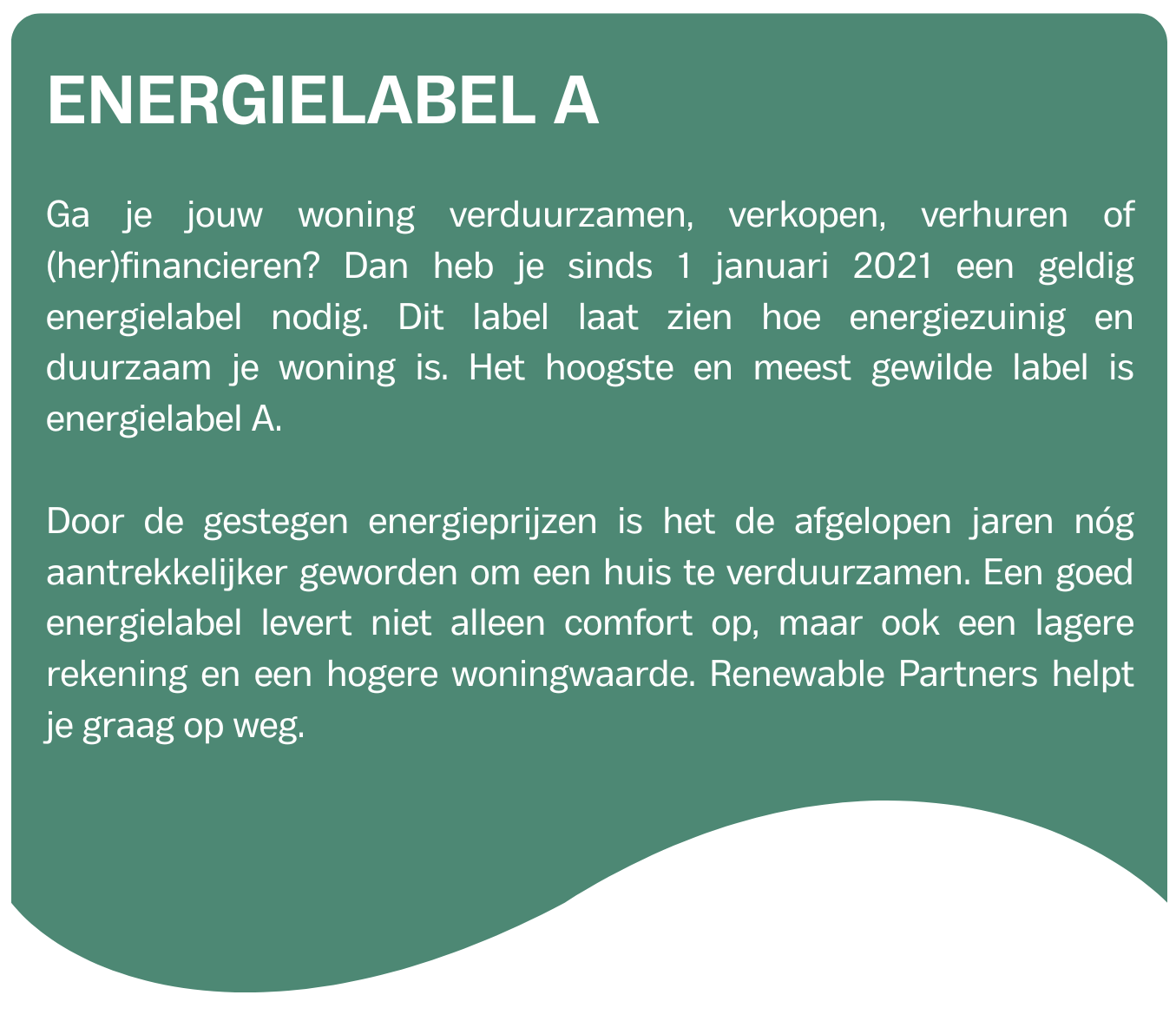
What is the difference between energy label A and A+++?

The difference lies mainly in the degree of insulation and the proportion of sustainably generated energy. An A label can be achieved with good insulation and an efficient installation. For A+++, more is needed: a large proportion of the energy must be generated sustainably, for example with solar panels and a heat pump.

What requirements must my home meet to qualify for energy label A?

The energy label is determined based on the fossil energy consumption of the home, expressed in kWh/m² per year. For an A label, this value is between 105 and 160 kWh/m² per year. With good insulation, an A label is easily achievable. Homes built after 1991 often already have sufficient basic insulation to fall into this category. Solar panels are therefore not necessarily required to achieve an A label.

What are the benefits of an A label?

  • An A-label home is excellently insulated.
  • You enjoy greater living comfort and lower energy bills.
  • You are contributing to a better climate.
  • Many banks offer interest rate discounts on mortgages for homes with an A label (average 0.1%–0.2%).
  • With an average home value of €387,000, this can amount to savings of €500–€1,500 per year.
  • I want to register my energy label!

    What our business customers say about Renewable Partners

    Practical experience – reliable energy expertise and results-oriented collaboration

    Frequently Asked Questions

    What does Renewable Partners do?
    Who are your services for?
    What is a WWS advisory report?
    How much does an energy label cost?
    |
    July 9, 2025

    Importance of QV10

    Importance of QV10

    Introduction

    What is the Qv10 value?

    The Qv10 value (also known as air permeability ) expresses how many cubic decimeters of air per second leak through the building envelope, per square meter of usable floor space, at a pressure difference of 10 Pascal. In other words: how much air escapes or enters through cracks and seams in the home when there is a small pressure difference (comparable to a light breeze).

    A low Qv10 value means that your home is very airtight, which directly contributes to higher energy efficiency. A high Qv10 value indicates many gaps and leaks, resulting in energy loss and comfort issues.

    Why is the Qv10 measurement so important?

    The Qv10 measurement is crucial in today's construction industry for several reasons:

    1. Impact on the Energy Label (BENG): Since the introduction of the BENG requirements (Nearly Energy Neutral Buildings), airtightness has been a mandatory part of the energy performance calculation. A poor Qv10 value can make it considerably more difficult to achieve a good energy label, even if the insulation is top notch. In fact, it can mean that your building does not meet the minimum energy performance requirements.
    2. Comfort and Health: Cracks and leaks cause drafts, cold spots, and temperature fluctuations, which reduce living comfort. In addition, unwanted air currents can lead to moisture problems and mold growth, resulting in potential health issues.
    3. Energy savings: Warm air that escapes through gaps in winter (or cool air that escapes in summer) must be constantly replenished and reheated or recooled. This leads to unnecessarily high energy consumption and therefore higher heating costs.
    4. Sound insulation: An airtight envelope also contributes to better sound insulation, resulting in a quieter and more peaceful living environment.

    How is a Qv10 measurement performed?

    The Qv10 measurement, also known as a blower door test, is performed by a specialized consultant. This is done as follows:

    1. Preparation: All openings (windows, doors) are closed and ventilation openings are temporarily sealed.
    2. Installing a fan: A large fan (the "blower door") is placed in a doorway and creates a pressure difference between the inside and outside.
    3. Measuring air flows: The fan sucks air out of the home or blows air in, while sensors accurately measure how much air is needed to maintain a constant pressure difference of 10 Pascal. This provides immediate insight into the amount of unwanted air leakage.
    4. Leak detection (optional): If the Qv10 value is too high, smoke or a thermal imaging camera can be used to locate the exact locations of the leaks so that they can be repaired.

    The Role of Qv10 in BENG and a Good Energy Label

    Within the BENG calculation (which forms the basis for the energy label), the Qv10 value is one of three indicators that determine energy performance. A low Qv10 contributes positively to the BENG score, which directly results in a better energy label. For project developers and builders, this means that investing in an airtight building envelope not only contributes to sustainability and comfort, but is also essential to meet legal requirements and deliver a high-quality product.

    A correctly performed Qv10 measurement is therefore not a minor detail, but a fundamental step in creating truly energy-efficient and comfortable homes.

    Reviews

    What our business customers say about Renewable Partners

    Practical experience – reliable energy expertise and results-oriented collaboration

    Quote Icon
    Star IconStar IconStar IconStar IconStar Icon

    I have experienced Renewable Partners as a reliable and professional party in the field of sustainable energy. They think along well, are transparent in their communication, and deliver customized solutions that really meet the need.

    Arcen Day
    The Hague Project
    Quote Icon
    Star IconStar IconStar IconStar IconStar Icon

    Professional and readily available for questions. I am very satisfied with the service and can recommend the company. Kind regards,

    Anna Kalbarczyk
    Managing Director
    Quote Icon
    Star IconStar IconStar IconStar IconStar Icon

    While my energy label doesn't matter at all, new residents are going to renovate the entire house, Nik has still made a thorough and clear report of my old farmhouse. TOP job. Thanks

    Anke Hartman
    Founder of UrbanWave Solutions
    Quote Icon
    Star IconStar IconStar IconStar IconStar Icon

    The energy label inspector is a highly skilled professional who knows his trade. We were helped well and quickly with his advice. The reactions of this company are praising the price, the lowest, and the service, downright TOP!

    Jos Ernst
    Chief Operating Officer of PrimeLogistics
    Quote Icon
    Star IconStar IconStar IconStar IconStar Icon

    The recording was done carefully. All documents and construction dimensions were checked/recorded by the advisor Ronan van der Loo. And good advice was given. He finished the recording within 2 hours.

    Huub Aerts
    Head of Operations
    Review Left Arrow
    Review Right Arrow
    90%
    Customer satisfaction score
    Frequently Asked Questions

    Frequently asked questions

    What does Renewable Partners do?
    FAQ Icon
    Who are your services for?
    FAQ Icon
    What is a WWS advisory report?
    FAQ Icon
    How much does an energy label cost?
    FAQ Icon