


Boost Your Home's Energy Rating: Practical Steps


Improving Your Home's Energy Label in the Netherlands: Practical Steps to Boost Your Rating
Are you shocked by your energy bill every month? A poor energy label (like D, E, or F) is often the direct cause. This article is your roadmap to lowering that bill and permanently increasing your home comfort.
The question "how do I get a higher energy label?" begins with understanding what an advisor looks at. Your home is assessed on four main components, which you can think of as the organs of your house:
- The shell: The insulation of your roof, walls, floor, and glass.
- The 'engine': Your heating system, such as the central heating boiler or heat pump.
- The 'lungs': The way your house ventilates to stay healthy.
- Self-generation: The presence of features such as solar panels.
The impact of various insulation measures is fundamental here. Without a well-insulated 'shell,' the heat from your 'engine' escapes directly outside. A typical 1970s terraced house, for example, loses a lot of heat through uninsulated walls and the floor, which explains a D or E label. Understanding where your house is leaking is therefore the key to the biggest gains.
Quick Wins: 3 Inexpensive Measures That Help Immediately
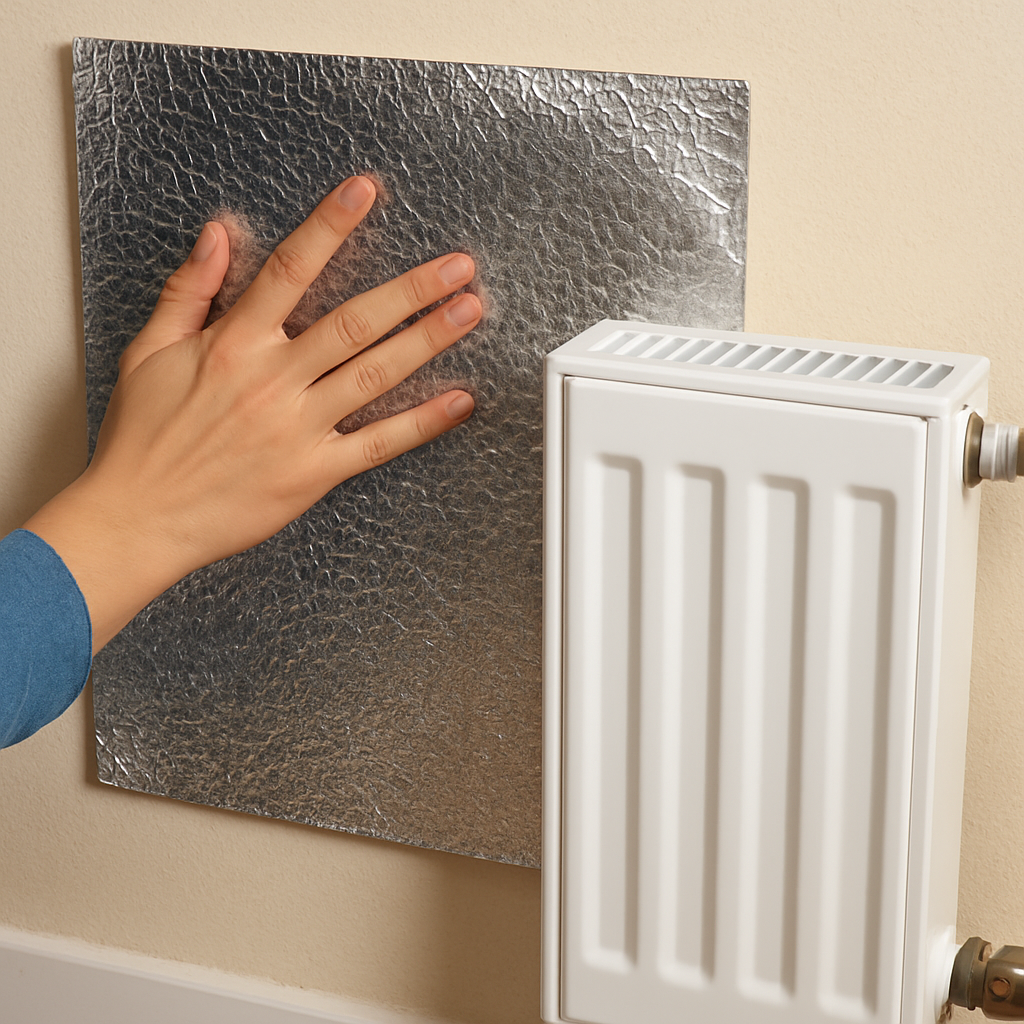
Before you consider major renovations, there are smart, inexpensive steps that make an immediate difference. For instance, a radiator against an exterior wall loses a lot of heat. By applying radiator foil behind it, a ten-minute job, you reflect that heat back into the room. This small investment yields immediate savings that can amount to several tens of euros per year.
Do you recognize that annoying cold draft near windows and doors? That's not just uncomfortable; it also needlessly drives up heating costs. With weatherstripping, you can easily seal these gaps yourself. It's one of the cheapest ways to immediately increase comfort in your home while simultaneously lowering your energy bill.
Finally, take a look at the heating pipes in cold spaces like the crawl space or attic. By wrapping them with pipe insulation, you prevent the hot water from cooling down unnecessarily. These initial, quick wins are a perfect start to making your home more energy-efficient without a large investment.
The Big Leap: Which Insulation Measure Yields the Most?
Now that the small heat leaks have been sealed, it's time for the major steps that will wrap your house like a warm winter coat: insulation. The most profitable start is often cavity wall insulation. Many houses built between 1930 and 1975 have an empty space (the cavity) between the inner and outer walls. Filling this is relatively inexpensive, and depending on your home type, you can often earn back the investment within 3 to 5 years.
Do you often suffer from cold feet, even when the heating is on? Floor insulation offers the solution. Besides an annual saving of around €180, this provides an enormous boost in comfort. The heat stays in the living room, and the cold, rising air from the crawl space becomes a thing of the past.
You'll achieve the single biggest saving with roof insulation, especially if your attic is a heated living space. Because heat rises, an uninsulated roof loses the most energy. Good insulation here can save up to €650 per year and is an essential step in lowering the costs of a house from energy label G to C.
These measures require an investment, but the government is here to help. Thanks to the national subsidy for insulation, the payback period is significantly shortened. By properly addressing the 'shell' of your house, you lay the perfect foundation for the next step: improving your glass and heating system.
From Label D to B: The Impact of Modern Glass and Smart Heating
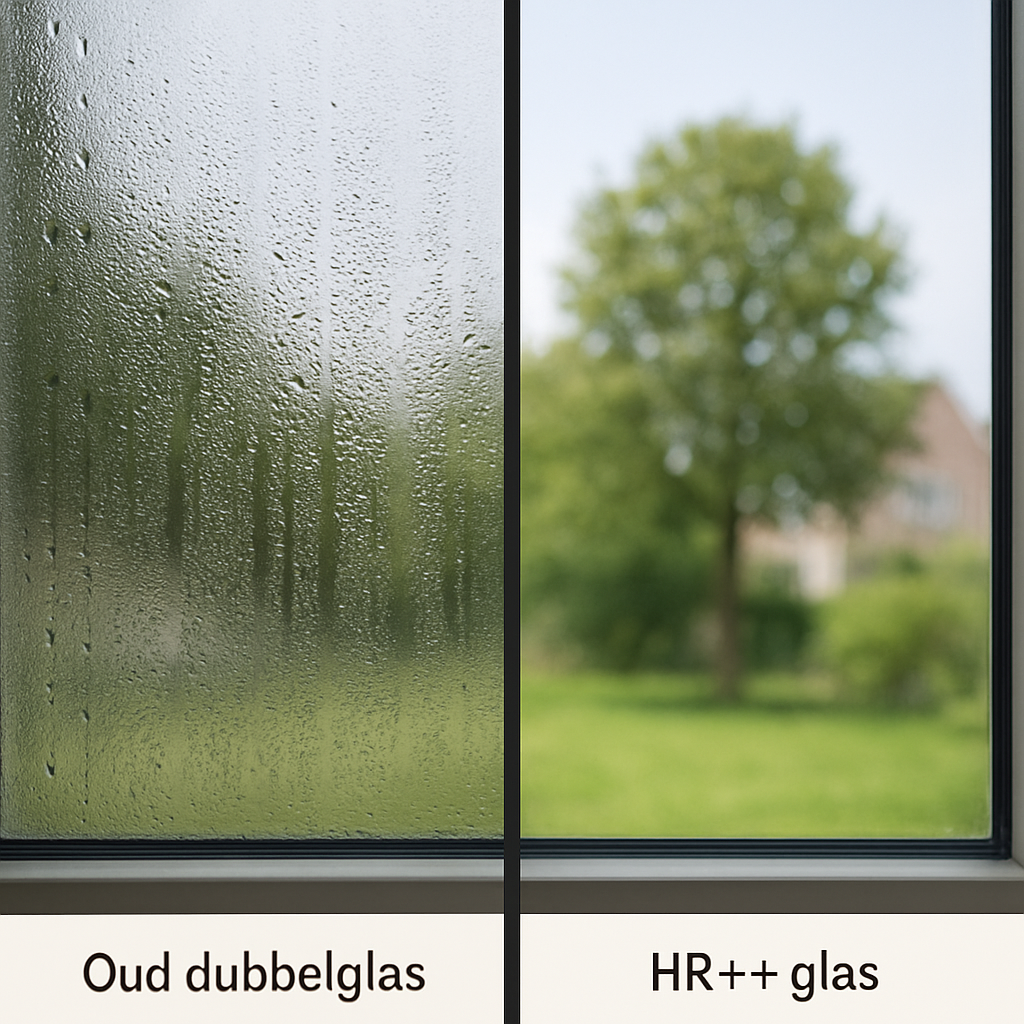
With a well-insulated house, the foundation is laid, but the windows often remain a weak spot. Do you feel a cold draft near the window, even when it's closed? That is a cold downdraft: cold air 'falling' along the glass surface, causing a drafty feeling. Modern HR++ glass solves this. Thanks to an invisible metal coating and a special gas filling instead of air, this type of glass retains heat much better. It immediately feels more comfortable indoors.
Replacing old double glazing is a measure with a huge impact. For many homes, this is precisely the step needed to jump from energy label D to C. You'll notice it not only in a lower energy bill but also in your living comfort. Condensation on the inside of the windows on a cold morning is a thing of the past with HR++ glass, as the adjacent image clearly shows.
Once your house is well insulated and fitted with modern glass, you can tackle heating more efficiently. A hybrid heat pump is a smart device that works with your central heating boiler. On most days, it extracts heat from the outside air, meaning your gas boiler only needs to assist when it's truly freezing. This can reduce your gas consumption for heating by more than 60%.
However, this step is only worthwhile if the foundation is in order. Installing a hybrid heat pump in a poorly insulated house is a waste of money; the generated heat escapes directly outside. Therefore, always ensure good insulation and HR++ glass first. With that knowledge, you are ready to create a concrete plan.
Your Action Plan: From Plan to a Better Energy Label in 5 Steps
The path from a high energy bill to a comfortable, efficient home no longer feels overwhelming. You now know which measures have the biggest impact and how to approach the process. Use this simple checklist for making a purchased home more sustainable to stay on track:
- Start with an online home scan or request customized energy advice for your home.
- Request at least three quotes for the chosen measure(s).
- Check the ISDE subsidy conditions via the RVO website.
- Have the work carried out by a certified company.
- Hire an energy advisor to register your new, official label.
Each step on this list is not an expense, but a direct investment in your own living comfort and a lower energy bill. You now have the control to transform your home, not because you have to, but because you know it's a smart choice for now and for the future.




Boost Your Home's Energy Rating: Practical Steps
Energy label F
Homes with energy label F are among the most energy-inefficient homes in the Netherlands. It is the second-worst energy label, just above energy label G. These labels are often referred to as orange and red because of their very high energy consumption and the unnecessarily high energy costs that come with it.
In addition, an inefficient energy label usually results in a lower property value and slower sales. Renewable Partners explains exactly what an F label means, what conditions apply, and how you can make your home more sustainable in a smart and affordable way.